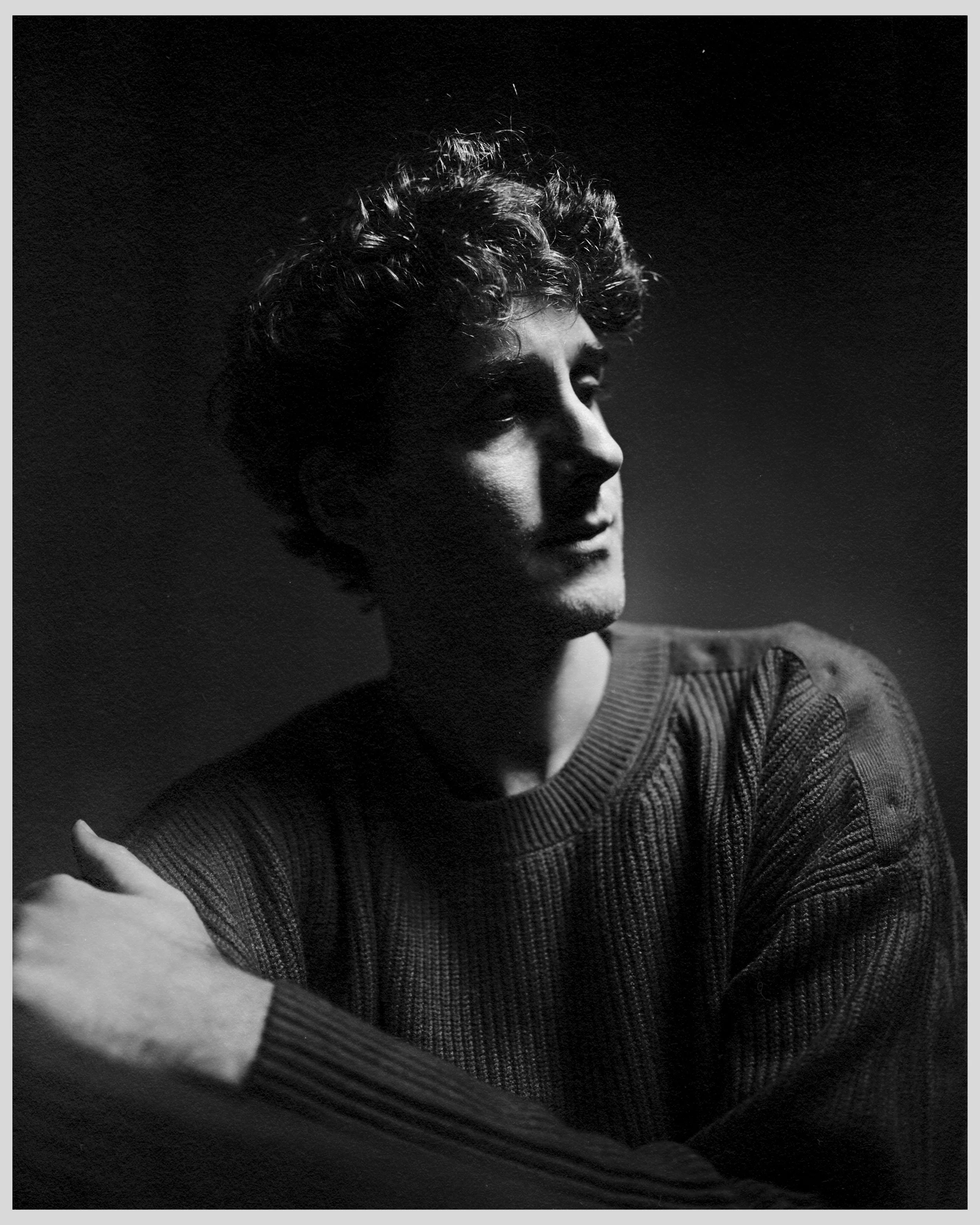
There is a quiet intensity to the music of Sebastian Plano – a feeling that each note carries the weight of distance and time.
The Argentinian cellist, composer and Grammy-nominated artist has carved out a distinctive place within today’s contemporary classical landscape, creating works that move fluidly between acoustic tradition and electronic atmosphere. His music draws on memory, geography and personal history, often unfolding with a cinematic sense of scale. With his forthcoming album “Solo”, however, Plano turns decisively inward, stripping everything back to reveal his most direct and unguarded voice.
Born in Rosario in 1985 into a deeply musical family, Plano grew up surrounded by sound – both parents played in the city’s symphony orchestra, while his grandfather was a tango composer and bandoneón player. He began the cello at seven and was composing by twelve, shaped as much by classical training as by an early fascination with electronic music, sparked by artists such as Vangelis. That balance between tradition and experimentation would remain central to his work.
At seventeen, he left Argentina alone, beginning a journey that would take him across continents. Studies at the United World College of the Adriatic, followed by scholarships to the Boston Conservatory and the San Francisco Conservatory, provided a rigorous foundation. Yet his path unfolded in unexpected ways. In San Francisco, he busked in subway stations, testing the immediacy of his music in public space. Later, in Berlin, he became part of a generation of composers reshaping the classical idiom, collaborating with artists such as Nils Frahm while developing a language that fused cello, piano and electronics into richly layered textures.
Early albums such as “Arrhythmical Part of Hearts” and “Impetus” hinted at a singular voice, but it was “Verve” (2019), which earned a Grammy nomination, and “Save Me Not” (2021) that firmly established Plano on the international stage. His recordings, often entirely self-performed and produced, create the impression of large ensembles while remaining rooted in the intimacy of a single performer. A formative setback – the theft of his computer and hard drives in 2013 – led him to reconstruct lost works from memory, an experience that deepened his engagement with themes of loss and reconstruction.
Now based between Berlin and northern Italy, Plano’s work has extended into film and video game scoring, including the soundtrack to “Everything”, which was long-listed for an Academy Award. Yet throughout these varied projects, his music has consistently returned to questions of identity, belonging and the emotional imprint of place. These concerns come into particularly sharp focus in “Solo”, released on 26 June. Written and recorded over two years, often in isolation, the album marks his first work entirely for unaccompanied cello. Where earlier recordings layered instrumental and electronic elements into expansive soundscapes, “Solo” presents something far more exposed – a single instrument, unadorned, carrying the full weight of expression.
I realized that for years I had been moving through the world with a cello strapped to my back, Plano reflects, but with Solo, I finally experienced what it means to journey completely alone with it.
The observation captures the arc of a life shaped by movement, from Rosario to Duino, Lisbon, Boston, San Francisco, Berlin and beyond, each place leaving its trace in his music.
Ultimately, “Solo” is a meditation on identity – on what remains when everything else is stripped away. “When you don’t fully belong anywhere,” Plano observes, “you either disappear or you become very, very clear about who you are.” In presenting his music in its most exposed form, he chooses clarity. What emerges is not simply a collection of works, but a reflection of a life in motion, brought into focus through a single, resonant voice.